
Discover Smartwool
Découvrez la marque Smartwool et leurs essentiels en mérinos pour bien affronter le froid.

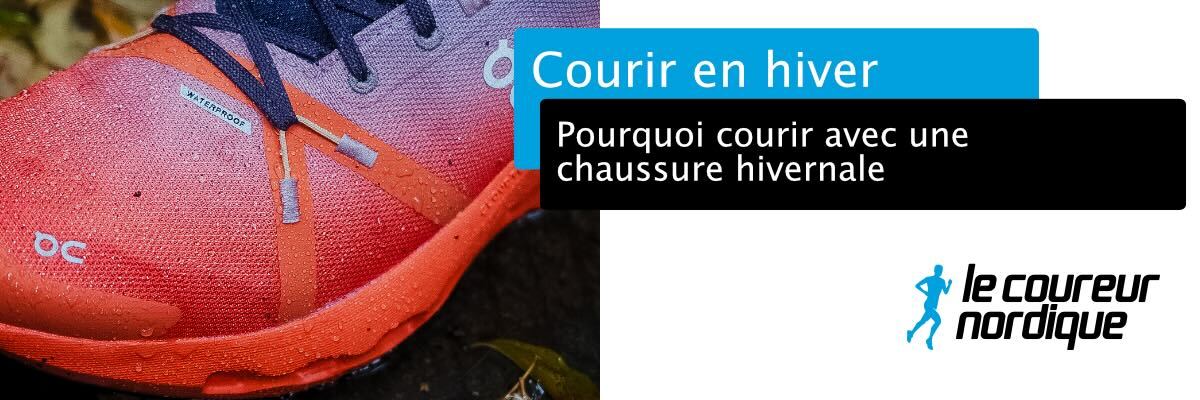
Choosing the right shoes is essential for keeping your feet warm and preventing slips on snow and frozen ground. Whether you’re walking, road running, or trail running in the winter, opt for shoes with a GORE-TEX-type membrane to protect your feet from the elements—including water, snow, wind, and cold. They create a waterproof barrier that prevents moisture from penetrating, keeping your feet dry and at a comfortable temperature.
The first question a runner should ask before choosing a winter shoe is what type of surface most of their runs will take place on.
If you're an urban runner, most of your runs will take place on sidewalks, streets, or well-trodden trails—so they'll get quite a bit of wear and tear. Here are a few shoe models that are well-suited for urban conditions


For runners who are far from urban centers, shoes with more aggressive traction are the best choice. Streets and trails are often less traveled, so shoes with better traction in the snow are recommended. Here are a few good options for this type of run


New Balance
New Balance - Fresh Foam X Hierro Hiker GTX - Women's


New Balance
New Balance - Fresh Foam X Hierro Hiker GTX - Men's -


Several shoe models feature a built-in gaiter. These models are perfect for snowy days, hikes in the mountains, or for those who feel the cold more easily. Here are a few shoe models that meet this need


Salomon
Salomon - S/Lab Genesis Spine - Unisex


Salomon
Salomon - Winter Cross Spike - Unisex


La Sportiva
La Sportiva - Cyklon Cross GTX - Men's


La Sportiva
La Sportiva - Cyklon Cross GTX - Women's
There are 3 options available to you if you need extra traction.
You can choose a shoe model that comes with spikes as standard, such as the following models


Salomon
Salomon - Winter Cross Spike - Unisex


Salomon
Salomon - Spikecross 5 GTX - Unisex
Another option is to have screw-in studs added to your new shoes, or to a pair you already own. To do this, the area where the stud is screwed in must be large enough for it to hold securely.
The last option is to add ice cleats over your shoes. Here are the cleats we recommend based on the surface you run on.


Life Sports Gear
Life Sports Gear - Spike Pro2 (Traction)


Ice Trekkers
GORE-TEX is found in most winter running shoes. The waterproof membrane, often identified by the letters GTX, acts as a barrier against water, slush, and cold. GORE-TEX is breathable in its own way, but if, unfortunately, the inside of the shoe gets damp or wet, the water won’t escape. Some shoe models feature a proprietary membrane instead. You won’t get the same level of waterproofing as with a GORE-TEX shoe, but you’ll still have a comfortable shoe for winter conditions.
Good news for those with wide feet: several waterproof winter shoes (GTX) are available in “2E” (men’s) or “D” (women’s) sizes. Feel free to ask our team for advice to find the right model for you. And if no GTX option fits you perfectly, a trail running shoe paired with waterproof Dexshell socks or merino wool socks will work just fine.


Découvrez la marque Smartwool et leurs essentiels en mérinos pour bien affronter le froid.

In 2026, the adidas Adizero Adios Pro EVO 3 made a big entrance at the London Marathon, on the feet of Sabastian Sawe. Weighing under 100 grams and packed with...


Aux Lièvres: an urban rally to kick off the festivities


Running through winter in Québec City can seem intimidating at first, especially with the cold, the snow and sometimes slippery surfaces. But with the right adjustments, winter running is not...

Choosing the right shoes is essential for keeping your feet warm and preventing you from slipping on snow and frozen ground. Whether you’re walking, road running, or trail running in...

Cross-country skiing is the perfect way to enjoy Québec winters, whether you want to unwind in nature or train on technical trails. With three different styles of cross-country skiing, classic,...